Don’t touch people without their consent. Don’t touch them if they say ‘no’ or shake their head. No means no. It doesn’t mean yes. It doesn’t mean maybe. No means no.
Don’t touch them if they visibly look uncomfortable or stressed if you do touch them. Don’t touch them even if they don’t say anything; they could be to scared to speak out and say no. They could be frozen in fear because they had a traumatic experience with someone touching them.
No, they are not playing ‘hard to get’. No, they don’t want you touching them UNLESS there is a explicit, clear and verbal agreement, and they tell you, looking into your eyes and saying that it’s okay for you to touch them.
Recap: DON’T TOUCH PEOPLE WITHOUT THEIR CONSENT
Thanks for reading this PSA
Oh god this reminded me of when some guy (that I just met), without asking, reached over and grabbed some of my hair. Like I’m used to it at this point but my god people need to stop that.
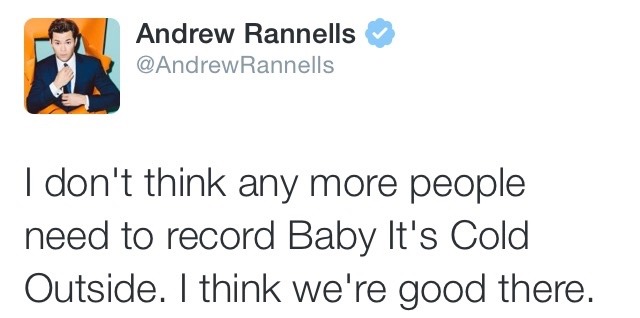
It’s time to bring an end to the Rape Anthem Masquerading As Christmas Carol
Hi there! Former English nerd/teacher here. Also a big fan of jazz of the 30s and 40s.
So. Here’s the thing. Given a cursory glance and applying today’s worldview to the song, yes, you’re right, it absolutely *sounds* like a rape anthem.
BUT! Let’s look closer!
“Hey what’s in this drink” was a stock joke at the time, and the punchline was invariably that there’s actually pretty much nothing in the drink, not even a significant amount of alcohol.
See, this woman is staying late, unchaperoned, at a dude’s house. In the 1940’s, that’s the kind of thing Good Girls aren’t supposed to do — and she wants people to think she’s a good girl. The woman in the song says outright, multiple times, that what other people will think of her staying is what she’s really concerned about: “the neighbors might think,” “my maiden aunt’s mind is vicious,” “there’s bound to be talk tomorrow.” But she’s having a really good time, and she wants to stay, and so she is excusing her uncharacteristically bold behavior (either to the guy or to herself) by blaming it on the drink — unaware that the drink is actually really weak, maybe not even alcoholic at all. That’s the joke. That is the standard joke that’s going on when a woman in media from the early-to-mid 20th century says “hey, what’s in this drink?” It is not a joke about how she’s drunk and about to be raped. It’s a joke about how she’s perfectly sober and about to have awesome consensual sex and use the drink for plausible deniability because she’s living in a society where women aren’t supposed to have sexual agency.
Basically, the song only makes sense in the context of a society in which women are expected to reject men’s advances whether they actually want to or not, and therefore it’s normal and expected for a lady’s gentleman companion to pressure her despite her protests, because he knows she would have to say that whether or not she meant it, and if she really wants to stay she won’t be able to justify doing so unless he offers her an excuse other than “I’m staying because I want to.” (That’s the main theme of the man’s lines in the song, suggesting excuses she can use when people ask later why she spent the night at his house: it was so cold out, there were no cabs available, he simply insisted because he was concerned about my safety in such awful weather, it was perfectly innocent and definitely not about sex at all!) In this particular case, he’s pretty clearly right, because the woman has a voice, and she’s using it to give all the culturally-understood signals that she actually does want to stay but can’t say so. She states explicitly that she’s resisting because she’s supposed to, not because she wants to: “I ought to say no no no…” She states explicitly that she’s just putting up a token resistance so she’ll be able to claim later that she did what’s expected of a decent woman in this situation: “at least I’m gonna say that I tried.” And at the end of the song they’re singing together, in harmony, because they’re both on the same page and they have been all along.
So it’s not actually a song about rape – in fact it’s a song about a woman finding a way to exercise sexual agency in a patriarchal society designed to stop her from doing so. But it’s also, at the same time, one of the best illustrations of rape culture that pop culture has ever produced. It’s a song about a society where women aren’t allowed to say yes…which happens to mean it’s also a society where women don’t have a clear and unambiguous way to say no.
remember loves: context is everything. and personal opinion matters. If you still find this song to be a problem, that’s fine. But please don’t make it into something it’s not because it’s been stripped of cultural context.
This is actually really interesting. I’ve never known a lot of the background to this song.
Making its annual rounds
Like I have a hard time believing a person actually exists that would not understand the context and innocence of this song??? Like would actually just assume it was a song straight up about date rape????? Like….???
This was my and my husband’s song at our wedding reception. We both love the song and it illustrated how we felt while dating.
My mother was very strict, despite my being in my early twenties, and wouldn’t let me stay out late with him. He’d never given reason not to be trusted, my mother just had it in her head of “boy, girl, alone together, accidents could happen; NOT MY LITTLE GIRL, NUH UH!” An old way of thinking, but understandable to some degree. Although my father was of the opinion that I’m “a grown-ass adult and can do what she wants.”
So, naturally, while we were dating, I was not allowed to stay late, even if the weather got bad enough that I didn’t feel safe driving on the roads. He and his parents, for the sake of my safety, would often try to convince me to just stay, at least until the weather let up a bit. But I knew my mother wouldn’t have it, no matter the excuse. We had a lot of back and forth moments like this, one of which ended with my mother sending my father out in his work truck to pick me up despite the fact the roads were flooded.
It took a lot of talking to my mother and eventually our getting engaged before she finally relented enough to let me spend nights with him on occasion, as long as she knew where I was.
It was all frustrating, and honestly stupid, but through all of it we were able to stay together.
So the idea of the song being about date rape, and the guy slipping something in her drink, is honestly absurd. It’s an older song, based on an older frame of mind. About a girl who wants to stay, but knows she shouldn’t because her family, among other people, might think ill of her. About a guy who, yes, does hope for a good night with her, but also might actually be concerned for her safety during bad winter weather. It’s about a couple in love who just wants more time together.
Stop twisting a perfectly good holiday love song into something nefarious, and just enjoy it for what it is.
I hate when antis says “The Accords take away their rights!” Like what rights are you talking about? Which rights? I certainly don’t have the right to jet to Russia and beat up some funky looking monster and then go back to America. Do you guys?
What I love/find hilarious about the Iron Man sequels is that, flawed as they are, they’re also the rare superhero films where I remember the character arcs waaay more clearly than the “actual plot”:
IM2 isn’t “IRON MAN vs WHIPLASH,” it’s “IRON MAN vs BEIng so afraid of showing vulnerability that he would literally rather die than admit he needs help”
IM3 isn’t “IRON MAN vs KILLIAN” It’s “IRON MAN vs PTSD AND ANxiety attacks that prevent him from even having normal conversations with his friends”





 A Glitch Named Anti